How a Turned Hem Protects a Garment’s Raw Edge
Learn how a turned hem protects a garment’s raw edge, and decide whether a loose hem needs a deeper fold, new stitches, or fabric repair.
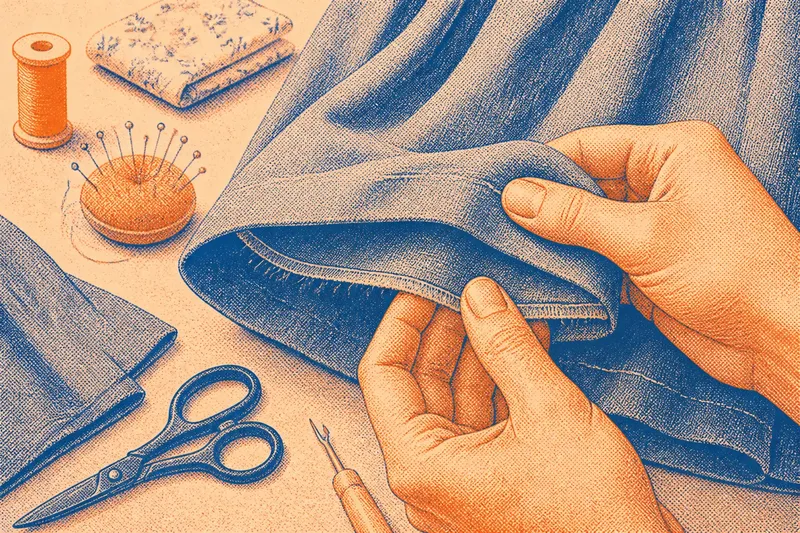
The common mistake with a turned hem is to replace loose stitches without checking whether the fold still covers the cut edge. That can leave fraying fabric exposed, even when a fresh row of thread looks tidy. A turned hem protects a garment’s raw edge through the way the fabric is folded, while stitching keeps that fold in place.
How does a turned hem protect a raw edge?
The raw edge is the cut boundary of the fabric. It may have loose threads or exposed yarns that can unravel as the garment is worn, handled, or washed. A turned hem folds this edge toward the inside of the garment and secures it.
In a single-turn hem, the cut edge is folded under once. A double-turn hem folds it under again, enclosing it between layers of fabric. Either finish can work if it suits the cloth and keeps the edge covered. The stitching holds the chosen fold; it cannot make a shallow fold deeper or cover fabric that was never tucked under.
How can you tell whether the fold or the stitches failed?
Look at the inside of the garment before unpicking anything. If the fold has opened but the fabric edge is intact, the stitches may have broken or pulled free. If threads are escaping from inside a closed fold, its first turn may be too narrow or uneven. If the cloth is thin, torn, or worn through at the crease, new stitches may pull through it.
Imagine a cotton skirt with a narrow single turn and a cut edge peeking out along one section. The owner checks the inside, sees that the fold itself is shallow, and confirms there is enough length to turn the fabric again. They press a double fold in place, then secure it with a stitch that suits the skirt’s fabric. The expected visible result is a covered cut edge; the tradeoff is a slightly shorter skirt and a deeper fold.
Check the outside as well as the inside. A loose stitch row, an exposed edge, and weakened cloth call for different repairs.
How much fabric should the fold use?
There is no single fold depth for every garment. Lightweight fabric may turn neatly with a narrow fold, while thick cloth can become bulky if folded too deeply. Curved edges can also resist a wide, flat fold because the fabric has to spread or gather as it turns.
For a double-turn hem, the first fold needs to hide the raw edge, and the next fold needs enough fabric to hold securely. A deeper fold uses more garment length and can add weight. The available hem allowance—the fabric left below the finished edge—sets the practical limit.
Some garments use a narrow rolled finish or another edge treatment by design. Compare a worn section with an intact part of the hem before changing it. If the garment has been let down before, an old crease may help locate the previous fold, but fabric does not always hold a crease evenly.
Which stitch suits a turned hem?
Choose a stitch based on the fabric, the garment’s movement, and how visible the thread can be. A machine straight stitch can suit a sturdy hem where a visible line is acceptable. It secures the fold continuously, but may show on the outside.
A hand-sewn slip stitch can keep the outer face quieter. Take small bites from the folded hem and tiny catches from the garment fabric. Pull the thread only enough to secure the fold; excessive tension can draw the fabric into a ridge.
A blind hem uses intermittent catches intended to be less visible from the outside. It may suit stable woven fabric, while knit fabric often needs a stitch that can stretch. A small trial on a scrap or hidden area can show whether the cloth puckers, the thread shows, or the stitch restricts movement. Follow the garment’s care label and manufacturer instructions when they affect suitable handling.
What should you check before repairing a turned hem?
Use these observations to choose between restitching, refolding, or seeking help. Each result points to a different next action.
- Raw edge: Check whether the cut edge is fully enclosed. If it is covered, keep the fold and inspect the stitches; if it is exposed, refold to enclose it if enough fabric remains, or use a suitable edge finish.
- Fold depth: Check whether fabric lies beneath the stitch line and covers the edge. If the fold holds the edge securely, restitch only where needed; if it is too shallow, make a deeper fold if the garment has enough length.
- Cloth condition: Check for fraying, thinning, or a tear at the crease. If the fabric is sound, it can support a repair; if it is fragile, avoid stitching across weak spots and ask an alterations professional about options.
- Stitch path: Check for broken thread, loose loops, tight puckers, or stitches showing where they should be discreet. If the fold is sound and stitches alone have failed, replace or secure the affected stitches; if the line is pulling the cloth, adjust the tension or choose a better-suited stitch.
- Stretch and movement: Check whether the fabric stretches or feels restricted when the garment moves. If it is stable and woven, a suitable straight or blind stitch may work; if it stretches, use a stitch that can give rather than a rigid line.
- Available length: Check whether a deeper fold would change the garment’s length. If the new length is acceptable, refold and secure it; if not, preserve the current length and consider a narrower suitable finish or professional advice.
A tailor or alterations professional can assess delicate, valuable, or difficult garments, especially when the cloth itself is weakened.
What questions help identify a turned-hem problem?
Why is the raw edge showing through the hem?
The first fold may be too narrow, uneven, or open, leaving the cut edge exposed. Stitches that have come loose can also let the fold shift and reveal it.
Can a turned hem work on knit fabric?
Yes, if the stitch can move with the fabric. A rigid stitch may snap or make the edge feel tight, so try a suitable stretch stitch on comparable fabric before sewing the garment.
Why does a hem pucker after stitching?
The thread may be too tight, or the cloth may have been stretched or drawn up while sewing. Check whether the puckering follows the stitch line; if it does, ease the tension or choose a more suitable stitch.
Does every turned hem need a double fold?
No. A double fold encloses a raw edge, but a single turn or another finish may suit the fabric and design. Choose a finish that contains the edge and remains secure in wear.
How can you check that the hem is secure?
View the garment from both sides. On the inside, follow the fold to confirm the raw edge stays tucked in. On the outside, look for pulled spots, loose loops, or stitch marks that interrupt the cloth. Then move the garment gently as it is normally worn; a tight stitch may become noticeable only when the fabric flexes.
A turned hem works when its fold covers the raw edge, its stitches hold without puckering, and the cloth can move as intended. When searching for how a turned hem protects a garment’s raw edge, begin by identifying what has failed: the edge’s enclosure, the stitches, or the fabric itself. That check helps avoid removing sound stitching or making an unnecessary change to the garment’s length.