Oil or Wax for a Wooden Chopping Board?
Oil or wax for a wooden chopping board? Compare surface feel and upkeep to choose a food-contact finish that fits your routine and care habits.
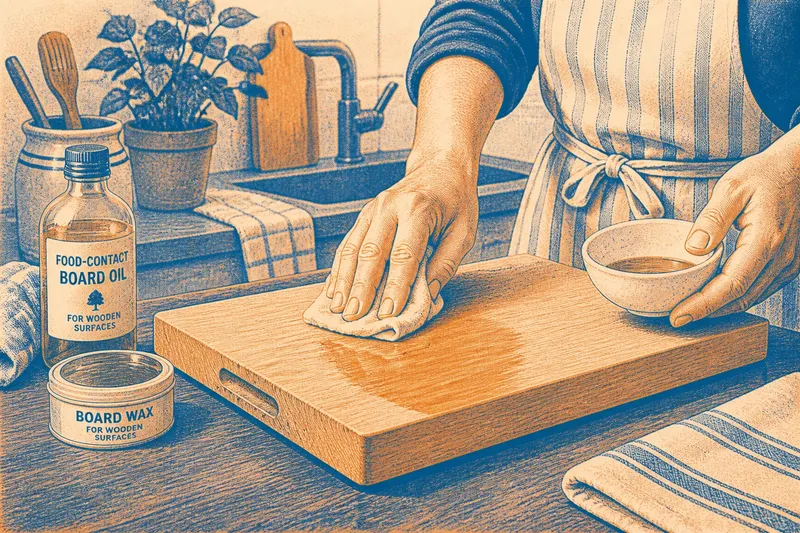
The common mistake with oil or wax for a wooden chopping board is expecting either finish to make the wood waterproof. The choice is really about surface feel and upkeep: neither finish replaces careful washing and drying.
Say you have a plain maple board that feels dry after repeated hand-washing. You want a comfortable chopping surface, not a glossy display finish, and you usually wash the board soon after cooking. Comparing oil and wax against those preferences can clarify the choice without treating either as a cure-all.
What should the finish do?
Separate two questions: what should the surface feel like, and what maintenance will you remember? A finish can make wood feel less dry and may slow how quickly it takes up moisture. It does not make wood impervious to water, food juices, or prolonged soaking.
Wash the board by hand with mild dish soap, rinse it, and stand it so air can reach both sides. Avoid leaving it in a sink or putting it in a dishwasher. Extended wetness and uneven drying can stress wood, regardless of finish.
Choose a product labeled for food-contact wooden surfaces and follow its directions. “Oil” and “wax” describe broad material groups, not a complete safety or use specification.
How does board oil feel?
Board oil is generally used to condition bare wood. It can soak into the surface instead of remaining as a distinct, hard film. The result often feels close to the wood itself, with a subdued appearance. The exact feel depends on the product and the board’s condition.
If the board looks dry or feels rough, clean it, let it dry fully, and check whether it needs another application according to the product directions. More oil will not improve a board that already feels comfortable.
Do not confuse board oil with cooking oil from the pantry. Some household oils can develop unpleasant odors or become sticky as they age. Use a product labeled for this purpose.
What does board wax add?
Board wax usually stays nearer the surface and can leave a smoother, more satin-like feel. Depending on the formulation, it may be used alone or combined with oil. It can create a more noticeable surface feel, but it is not a waterproof seal.
Chopping, washing, and wiping can wear or disturb a surface treatment. Renew wax when the finish no longer feels as you prefer, guided by the product directions and the board’s condition. Not every wash calls for another coat.
If you are unsure about the texture, try the product on a small, inconspicuous area only if its directions allow. Wax may feel too slick or coated to someone who prefers an unadorned wooden surface.
How do oil and wax compare?
The useful distinction is not simply which lasts longer, but which surface you prefer to maintain. Oil tends to preserve a direct wood feel; wax tends to add a more noticeable surface feel. Both require sensible washing and drying.
- Surface feel: If you prefer a low-coating touch, choose a suitable board oil; if you prefer a smoother, more finished feel, consider a suitable wax. If neither texture suits you, use neither until you can assess the surface preference.
- Upkeep: If you are willing to check the board and refresh its finish as directed, either option may fit; if not, avoid applying a finish by habit and focus on careful washing and drying.
- Washing: If the board is routinely hand-washed and dried promptly, continue that care with either finish; if it has been soaked or put through a dishwasher, let it dry fully and assess its condition before applying anything.
- Product label: If the label identifies the product for food-contact wooden surfaces and gives directions for your board, follow them; if not, choose a product with clear, relevant directions.
- Board condition: If the wood is merely dry-feeling, a suitable finish may improve its feel; if there is a deep split or damaged cutting surface, do not treat finish as a repair and seek appropriate repair advice or replace the board if it is unsafe to use.
In the maple-board situation, the starting point is a dry-feeling surface, a preference for direct wood feel, and a routine of prompt hand-washing. The owner checks the label on a food-contact board oil, applies it as directed, and lets the board dry before use. Afterward, the surface feels closer to the preferred texture, while the owner continues washing and drying it as before. The tradeoff is straightforward: oil suits the desired feel, but it does not remove the need for care.
What questions do people ask about board oil and wax?
Can oil or wax make a board waterproof?
No. These finishes can affect surface feel and moisture uptake, but wood remains vulnerable to prolonged wetness. Wash by hand, dry promptly, and avoid leaving the board submerged.
Can I use olive oil or another cooking oil?
Do not assume a pantry oil is suitable for maintaining a board. Choose a product labeled for food-contact wooden surfaces, since some cooking oils can turn sticky or develop odors as they age.
Can I put wax over oil?
Some board-care products combine oil and wax, while others have specific application requirements. Follow the chosen product’s label rather than layering materials by guesswork.
How can I tell when the board needs attention?
After cleaning and drying, look for a persistently dry or rough feel, or a finish that no longer feels comfortable to use. Treat these as cues to reassess care, not as a reason to apply more product automatically.
How should you make the choice?
For a wooden chopping board, oil or wax is a choice about surface feel and ongoing care, not a substitute for washing and drying. Keep the product label with your kitchen-care notes; when the board feels dry, check the directions before refreshing it. That habit helps you avoid unnecessary coats while keeping the oil-or-wax choice tied to the way you actually use the board.