The Reuse Trap: When a Jar Is Just Another Jar
Reuse jars with a specific task, a suitable lid, and a clear storage place, so useful containers stay handy without crowding cupboards with wishful plans.
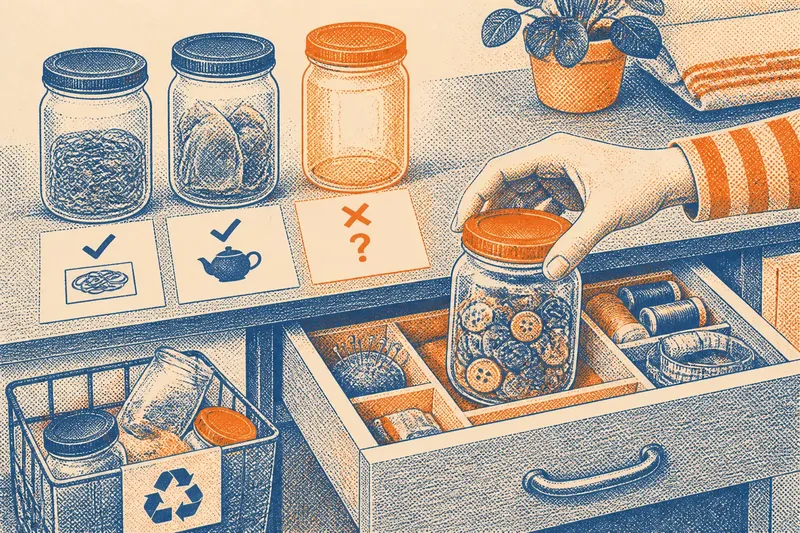
The common mistake with jar reuse is saving the container before deciding what it will do. A clean pasta-sauce jar can take up cupboard space while its lid goes missing and its imagined future never arrives. A specific task, a suitable fit, and a clear place to keep it help distinguish a useful container from another object to move aside.
What job will the jar do?
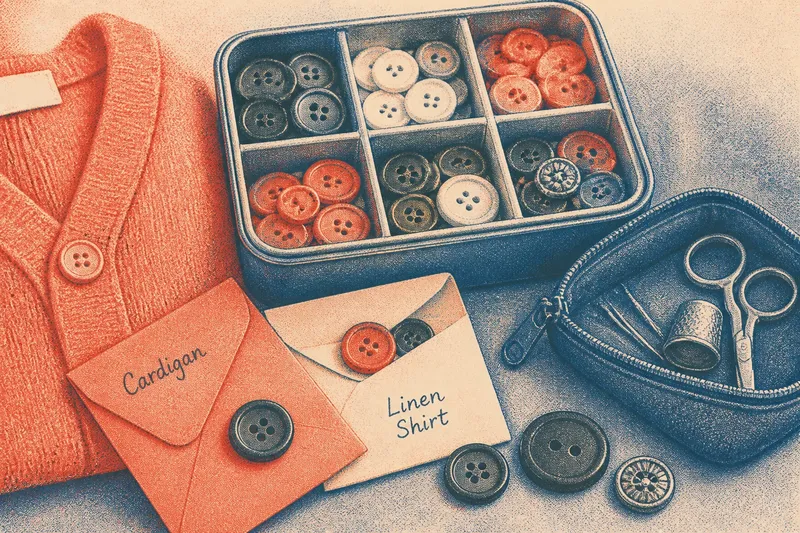
A jar is useful when it suits a task you expect to do, not merely because it could hold something. “For pantry storage” is too broad to guide a choice. Naming the contents and location is more useful: rubber bands in a desk drawer, loose tea bags beside the kettle, or buttons in a sewing box.
Compare that job with what you already own. If a tin holds your paper clips and you rarely make dressing, another container may add no value. Keep a jar when its shape or opening makes a real task easier; if no specific contents and location come to mind, let it move on.
Does the jar fit its job and storage spot?
Fit involves more than whether something can go inside. Consider the opening, height, shape, and how often you handle the contents. A narrow-necked bottle may suit dried herbs poured by the pinch but frustrate anyone who needs to scoop. A squat jar may be easy to reach in a deep drawer yet take up too much room on a crowded refrigerator shelf.
Check the intended place, too. A jar for a bathroom drawer should fit with the drawer closed. Think about whether you can open the lid comfortably, see the contents, and lift the jar when it is full. Compare it with the container already doing the job: if the new jar offers no useful change in access, visibility, or storage, it may be a duplicate.
Is it clean and sound enough for that use?
Wash a jar with dish soap and water, paying attention to the rim and lid threads. Let it dry fully before adding anything that could be affected by moisture. A container for dry craft supplies does not need the same preparation as one intended for food.
Smell is a practical check. Tomato sauce, pickles, and strongly seasoned foods can leave an odor after washing. A lingering scent may be acceptable for spare buttons but unpleasant for tea or sugar. Ask whether marks or stains interfere with the intended use rather than treating appearance as the only test.
Do not assume an ordinary food jar is suitable for every kind of storage. Food preservation and storage of substances with specific handling requirements may call for particular containers or methods. Follow relevant product instructions and local rules where safety depends on them. A cracked jar, chipped rim, or lid that will not close as needed may rule out the planned use.
Does the lid belong with the plan?
A jar without its original lid can still work as an open holder for pencils or paintbrushes. But if the planned use requires keeping dust out or preventing spills, a lid that almost fits is not enough. Threads and diameters vary, and a mismatched lid may not close securely.
Try the lid before storing the jar. Check that it turns smoothly, sits evenly, and has no rust, damaged lining, or residue that conflicts with the intended contents. Keep the jar and lid together as one ready-to-use item. If the lid is missing, keep the jar only when an open-container use is genuinely helpful.
How many jars should wait for a use?
Even suitable jars can crowd a cupboard when they sit in a waiting pile. Set aside a small, visible place for containers already matched to a task. If that space is full, favor jars with distinct uses rather than expanding the storage area for possibilities.
Separate ready-to-use jars from ones still being cleaned or paired with a lid. Finish those small tasks soon, or release the container. A saved jar should not remain an unresolved project simply because it might be useful someday.
Say you have three similar jars and a sewing drawer that needs a place for notions. You choose the jar whose opening lets you reach the contents, wash and dry it, then check that its lid closes smoothly. You put it in the drawer and release the other two because they have no separate job. The result is one container ready for a named task, not three jars waiting for inspiration.
How can you pass an unwanted jar along?
Wash and dry a jar before offering it to someone else, and include the lid only if it fits. Mention a difficult-to-remove label or lingering odor so the next person can decide whether it suits their needs.
Ask a neighbor, community group, or local reuse shelf whether it accepts jars before bringing a bundle. For containers nobody wants, check the disposal and recycling options where you live; acceptance varies by material and local rules. Passing an item into a reuse stream makes sense only when someone can use it.
What do people ask about jar reuse?
Can I reuse a jar without its original lid?
Yes, if the task works with an open container, such as holding pencils. If the contents need a cover, use a lid that fits and suits that purpose.
Does every jar need to be spotless?
The needed cleanliness depends on what will go inside. Wash away food residue and dry the jar, then consider whether any remaining odor or marks conflict with the intended contents.
Can I store food in any washed jar?
Not for every purpose. Ordinary storage and food-preservation methods may have different requirements, so follow relevant instructions and local rules when safety depends on the container or process.
What if I might need the jar someday?
Keep it only if you can name a likely use and a sensible place to store it. Otherwise, releasing it leaves room for containers your household already uses.
What should decide whether you keep it?
For jar reuse, a clear task is more useful than the thought that a container might come in handy. Let the task determine whether the jar’s opening, condition, and lid suit it. If they do, place the jar where the task happens; if they do not, choose another use or pass it on.
The effort already spent washing a jar does not create a reason to keep it. A container earns its place when it is ready for a specific job and easy to reach when that job comes up.