How to Sort Spare Buttons for Clothing Repairs
Sort spare buttons for clothing repairs by keeping garment matches close, checking loose buttons for real uses, and building a small kit you can use.
The common mistake with spare buttons is leaving them loose in a pocket until they fall out, then keeping every other odd button as compensation. The cost is practical: the button you need becomes hard to find, while the drawer fills with pieces that do not fit anything you own. Sorting spare buttons for clothing repairs keeps useful matches close and separates them from leftovers.
Why keep garment-specific spare buttons?
A button can crack, loosen, or go missing while the surrounding garment remains wearable. Its matching spare is useful because its size, shape, color, and finish were chosen for that garment.
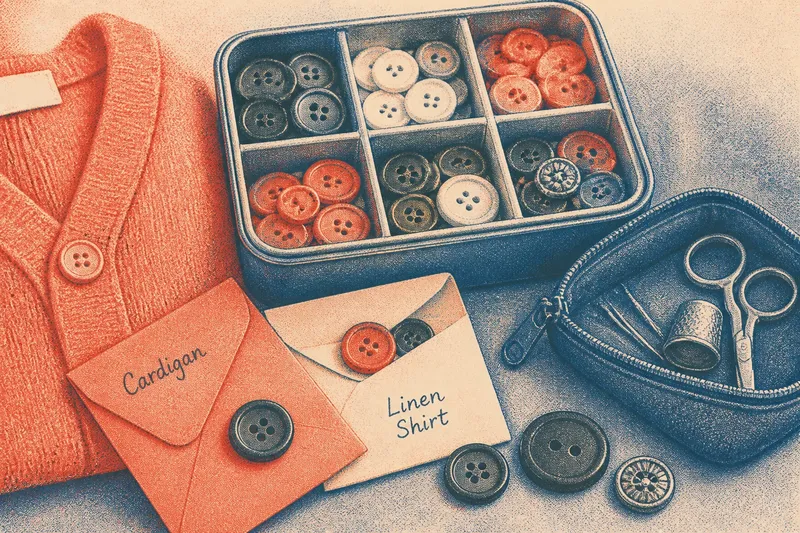
A spare may be attached to the care label or sewn into an inside seam. Keep it there if it is secure. If it has come loose, place it in a labeled envelope with the garment or in the same clothing-storage area, and write the garment name on the envelope.
Some garments also come with spare thread or a small piece of fabric. These serve different purposes: thread can help secure a button, while fabric may suit a patch or other repair. Keep an item only if you have a plausible use for it.
How should you sort spare buttons?
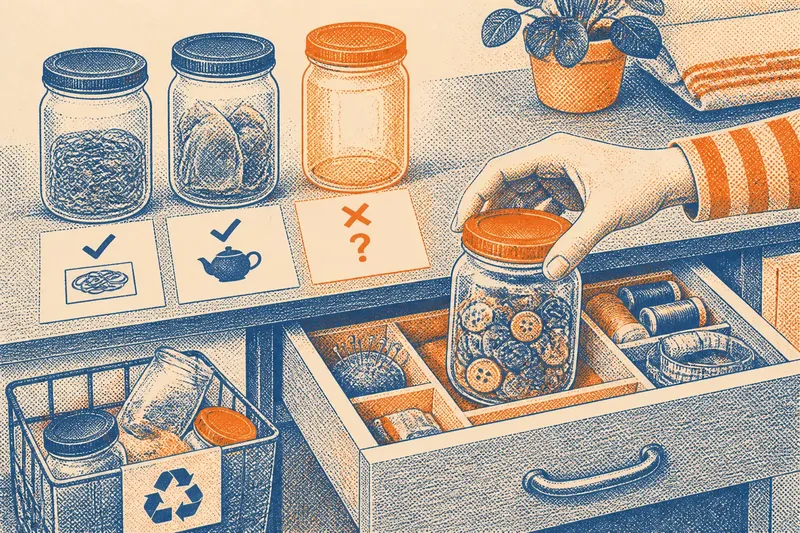
Separate buttons into three groups: matches for garments you still own, general buttons that could suit more than one item, and pieces with no likely use. This keeps a useful replacement from getting lost among unrelated odds and ends.
- Check whether the button matches a garment you still wear. If it does, store it with that garment; if not, assess it as a general button.
- Check whether a loose button passes through a buttonhole you use. If it fits and fastens securely, keep it in the general supply; if it does not, set it aside for reuse or discard it according to local options.
- Check whether the button’s color, shape, and finish suit an actual garment. If they do, keep it for that repair; if they do not, do not keep it merely because it is unusual.
- Check whether you can name a repair the button could serve. If you can, label or group it for that purpose; if you cannot, let it go.
- Check whether garment-specific spares are still attached or identifiable. If they are, leave them with the garment; if not, label an envelope before storing them.
- Check whether your container lets you see and retrieve small pieces. If it does, keep using it; if buttons disappear under larger items, switch to a shallow divided box or small zipper pouch.
Choose storage that contains small parts without hiding them. A lidded tin, divided box, or small zipper pouch can work. Keep needles in a case and scissors closed or protected, and store the kit where household members can find it.
Sort by a named purpose, not by the vague promise that something might come in handy.
What should you do with unmatched buttons?
Check a loose button’s holes or shank, thickness, and fit through the intended buttonhole. A button that looks right but will not fasten securely is not a useful substitute. If the garment is formal or has a row of matching buttons, consider whether one visible mismatch would suit it before sewing.
Say you find three buttons after donating an old shirt. One is a plain, sturdy match for a cardigan with a missing button; another is too large for every buttonhole you use; the third is decorative, with no likely counterpart. Compare the first with the cardigan’s remaining buttons, then keep it with the cardigan if it fits and fastens securely. Set aside the oversized button for reuse only if you can name a suitable garment; otherwise let it go. Pass on or discard the decorative button according to local options if no likely use comes to mind. The resulting supply contains one identified replacement rather than three unassigned pieces.
A labeled envelope is easier to sort than a deep jar when you have only a few unmatched buttons. If its contents have no named use, do not add more without reconsidering what belongs there.
How do you replace a missing button?
First check the care label, inside pockets, and storage envelope for the original spare. Compare it with the buttons still on the garment; a spare may differ in size or finish from the visible set.
If there is no suitable match, decide whether the repair needs to be discreet or simply functional. A close color may suit everyday wear. A contrasting button can look intentional on a casual garment if it fastens securely and the wearer likes the appearance. For a formal jacket or a row of matching buttons, replacing several as a set may look more coherent than changing one.
For a valuable or delicate garment, ask a tailor or clothing-repair professional about a suitable replacement. If you are unsure how the fabric will respond, check the care label and maker guidance rather than forcing a button through or pulling at the cloth.
Which spare-button questions come up most often?
Should I keep every button that comes off a garment?
Keep it if it is a needed match, fits a garment you own, or has a clear likely use. If you cannot identify a plausible job for it, it does not need space in your repair supply.
Where should I store a garment’s spare button?
Keep it attached to the garment if secure, or place it in a labeled envelope stored with that item. Store general-purpose buttons separately in a shallow container where you can see them.
Can I use a different style of button?
Yes, if it fastens securely and its appearance suits the garment. For a formal item or a matching row, replacing several buttons as a set may look more deliberate than using one noticeably different piece.
What if I do not sew?
Keep a garment’s matching spare if you may ask someone else to make the repair, and label it so its garment is clear. You do not need a sewing kit unless you expect to use it; a local repair service or skilled friend may be a better fit.
When does a button supply become clutter?
A button supply earns its space when it supports garments you wear, repairs you can arrange, or a household mending habit. It becomes clutter when its contents are unidentified, unsuitable, or disconnected from a likely repair. The useful distinction is whether you can make a clear decision about each button.
For spare buttons for clothing repairs, keep exact matches close to their garments and keep the general supply modest. When a button goes missing, you will know where to look and which replacements are worth keeping.